
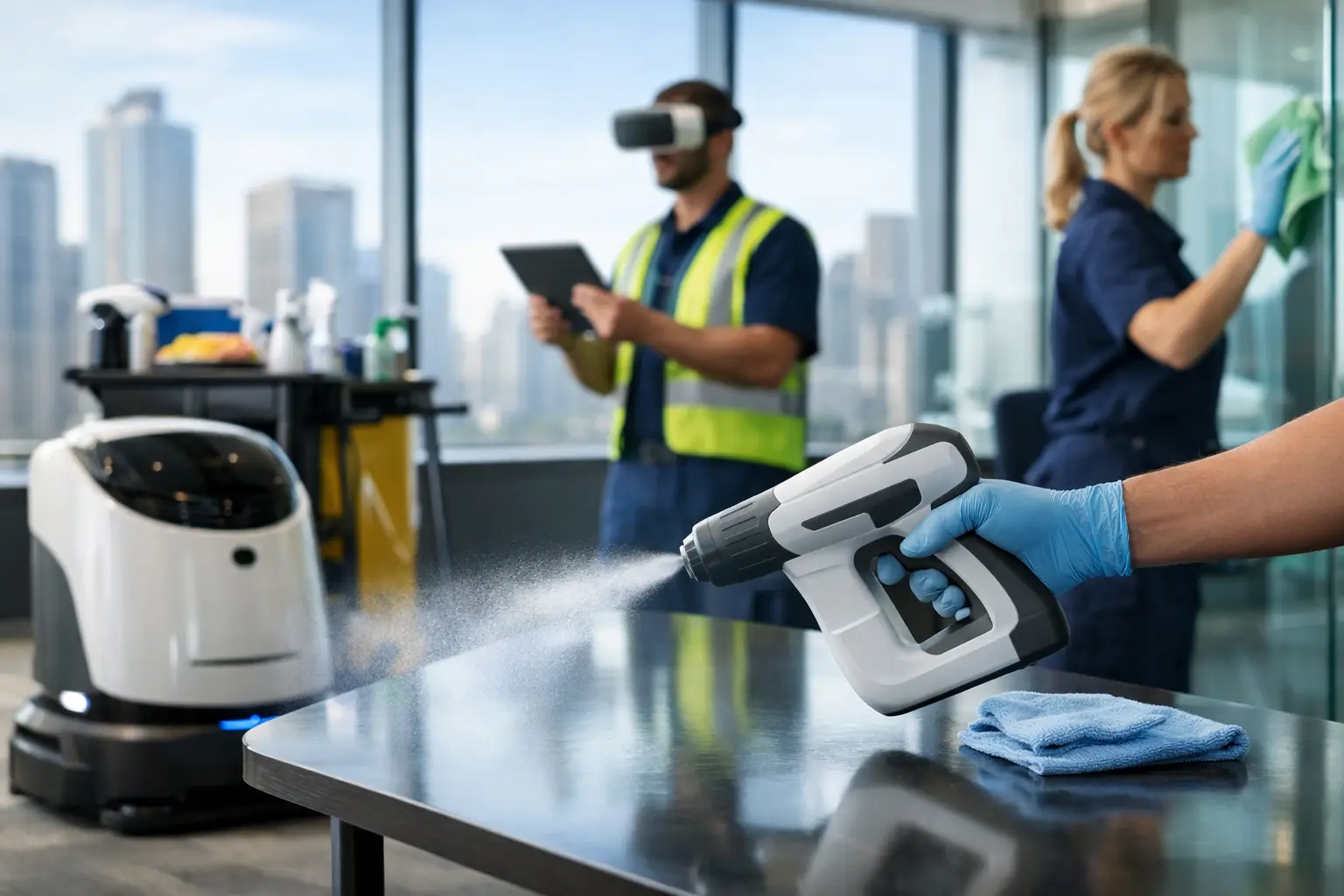
A cleaning contract is no longer judged only by whether floors shine and bins are emptied. For Australian facility managers, the current commercial cleaning trends Australia is seeing are tied to infection control, compliance evidence, tenant experience, cost control and the ability to keep a site operating without disruption.
That changes the conversation. A provider must understand how a healthcare waiting room differs from a busy office, why a school requires dependable daily hygiene routines, and when an industrial site needs more than a standard clean. The strongest cleaning programs are becoming planned facility solutions – designed around risk, occupancy, asset protection and measurable results.
Commercial Cleaning Trends Australia Is Seeing
Hygiene is becoming site-specific
The expectation for high hygiene standards remains firmly established, but blanket cleaning scopes are losing relevance. Businesses are assessing the areas that carry the greatest risk and assigning cleaning frequency accordingly. High-touch points such as door hardware, lift buttons, shared kitchen surfaces, bathroom fittings and reception counters require a different approach from low-traffic meeting rooms or storage areas.
This is particularly significant in childcare centres, schools, medical settings, gyms and strata common areas, where large numbers of people share spaces throughout the day. Infection control is not simply about using a disinfectant product. It depends on correct dwell time, safe chemical handling, suitable cleaning sequence and staff who understand cross-contamination risks.
For facility managers, the practical outcome is a cleaner scope of work. Rather than paying for broadly stated services, they can specify critical touchpoints, peak-use periods, washroom standards and escalation procedures. This supports better hygiene outcomes while keeping labour focused where it has the greatest value.
Daytime cleaning is gaining ground
After-hours cleaning remains essential for many offices, retail sites and education facilities. It reduces disruption and allows teams to work efficiently in empty spaces. However, more organisations are introducing daytime cleaning attendance as part of their routine.
A visible attendant can respond to spills, replenish consumables, manage washroom presentation and address rubbish before it becomes a complaint. In a premium office, retail environment or high-traffic strata property, this level of responsiveness can have a direct effect on how occupants and visitors perceive the building.
The trade-off is that daytime work must be carefully managed. Cleaners need appropriate presentation, communication skills and an understanding of how to work safely around staff, customers and students. The right model is often a combination: scheduled evening cleaning for detailed work, supported by daytime service for immediate needs.
Sustainable cleaning is moving beyond marketing claims
Sustainability is now a procurement consideration, particularly for organisations managing multiple sites, government contracts or environmental reporting requirements. Buyers are asking more practical questions about chemical selection, packaging, water use, consumable consumption and waste streams.
A sustainable cleaning program should not compromise hygiene or safety. In healthcare and infection-sensitive settings, effective products and procedures must always come first. Elsewhere, concentrated chemicals, controlled dilution systems, reusable microfibre materials and considered paper-product choices can reduce unnecessary consumption without lowering standards.
Waste management is also part of the cleaning conversation. Clear recycling stations, suitable bin placement and regular waste audits can improve separation at source. Results depend on the building’s occupants as much as the cleaning team, so signage and simple processes matter. A recycling plan that is difficult to follow will not deliver reliable outcomes.
Technology is improving accountability, not replacing people
Digital job management, inspection records and issue reporting are becoming standard expectations in larger commercial cleaning contracts. Facility managers want clear confirmation that agreed tasks have been completed, inspections have occurred and corrective actions have been followed through.
Technology can support this through scheduled checklists, time-stamped reports, photos where appropriate and rapid communication between cleaners, supervisors and site contacts. For multi-site businesses, this creates a more consistent view of service performance across Sydney, Melbourne, Brisbane and Perth.
However, technology is only useful when it reflects what happens on site. A completed digital checklist cannot compensate for poor supervision, insufficient staffing or a scope that does not match the building’s actual needs. The most effective approach combines transparent reporting with regular quality checks and accountable site management.
Integrated Facility Services Are Reducing Vendor Complexity
Commercial cleaning is increasingly connected to broader property maintenance. A facility manager may identify a damaged wall during a cleaning inspection, notice a blocked drain near waste areas or require pressure cleaning after a weather event. Managing every issue through a separate supplier creates delays, duplicated administration and unclear accountability.
This is why integrated facility services are becoming more attractive. Bringing cleaning together with services such as carpet cleaning, window cleaning, high-pressure cleaning, sweeping and scrubbing, plumbing, electrical work, handyman repairs and waste management gives organisations a more coordinated operating model.
It does not mean one supplier should be selected without checking capability. Specialised work still requires suitably qualified personnel, safe work methods and the right equipment. The advantage is having one accountable service partner able to coordinate the work, report on it and maintain a clear understanding of the site.
For property and strata managers, this can also help protect asset value. Regular cleaning identifies wear, staining, drainage problems and presentation issues before they become more expensive repairs or tenant concerns.
Labour Quality and Safety Are Procurement Priorities
The cleaning industry relies on people, and the quality of the workforce remains one of the biggest differentiators between contracts. Businesses are placing greater attention on induction processes, safety training, police checks where relevant, supervisor availability and continuity of assigned cleaners.
This is not only a service issue. It is a workplace safety issue. Cleaning teams may work around slips, chemical hazards, machinery, public access, sharps risks or confined operational spaces. In industrial facilities, warehouses and healthcare environments, site-specific training is essential.
A low-cost quote may appear attractive until absenteeism, inconsistent staff, missed tasks or safety failures create operational problems. Procurement teams should assess the full service model: staffing levels, relief coverage, supervision, quality assurance, insurance and the provider’s ability to respond outside ordinary hours.
Cleaning Scopes Are Becoming More Flexible
Hybrid work has changed office occupancy patterns, but it has not removed the need for cleaning. It has made demand less predictable. A workplace may be quiet early in the week and heavily occupied on key collaboration days. Boardrooms, kitchens and bathrooms can experience sharp spikes in use that a fixed, uniform schedule does not always address.
Flexible scopes allow services to reflect actual building activity. This may include increased attention to shared spaces on high-attendance days, periodic deep cleaning for low-use areas, or additional support after events and tenant move-ins. Retail sites face similar variations around seasonal trade, promotions and extended operating hours.
Flexibility should still be controlled by a clear agreement. Service changes need defined approval processes, reporting and agreed response times. Without that structure, a flexible arrangement can become unclear for both the client and provider.
What Facility Managers Should Review Now
The best response to these trends is not to add every available service to a contract. It is to review whether the existing plan reflects the building, its risks and the expectations of the people who use it.
Start with a site walk-through that considers occupancy, high-touch areas, peak periods, compliance needs and known presentation issues. Review cleaning frequencies against actual use, not assumptions made several years ago. Then assess whether reporting gives you evidence of performance or simply confirms attendance.
It is also worth examining where separate contractors are creating unnecessary administration. If cleaning, waste, maintenance and specialist periodic work can be coordinated under a capable provider, the site may benefit from faster communication and clearer accountability. Perfect One Services supports this integrated approach with commercial cleaning and broader facility services tailored to the operational needs of each location.
The right cleaning program should make a building easier to manage. When hygiene standards, maintenance needs and service reporting are planned together, facility teams can spend less time chasing tasks and more time maintaining a safe, professional environment for everyone who walks through the door.