
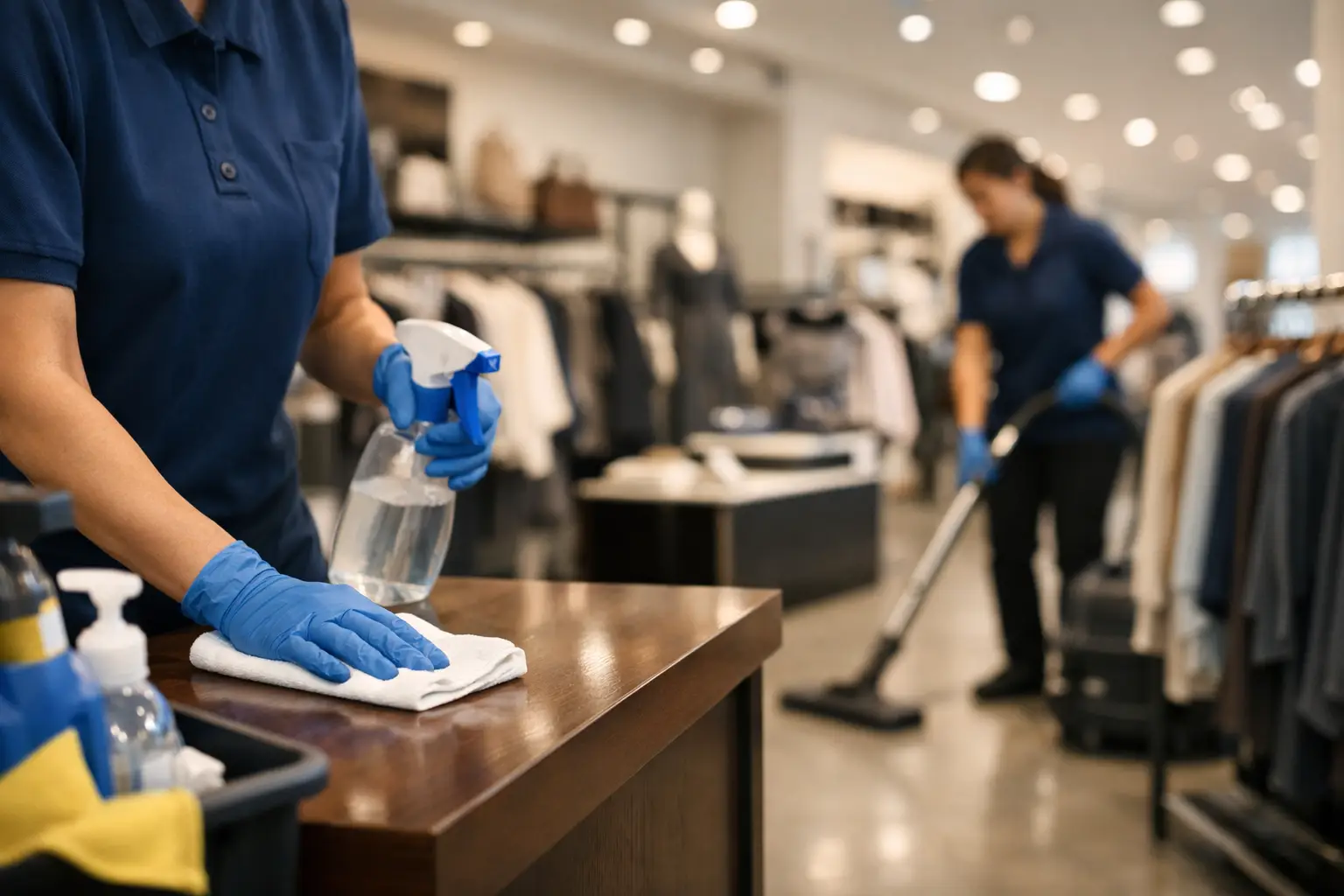
A smudged entry door, dusty shelves and marked floors do more than hurt presentation. In a retail setting, they shape customer perception within seconds and can create avoidable safety, hygiene and compliance issues. Retail cleaning services are not just about making a shop look tidy – they support trading conditions, protect brand standards and help managers keep high-traffic environments under control.
For retailers, presentation and operations are closely linked. Customers notice clean glass, fresh amenities and well-maintained floors, but they also notice what is missed. Sticky surfaces near checkouts, rubbish build-up in food-adjacent areas or grime around fitting rooms can quickly affect confidence in the business. That is why professional cleaning needs to be planned around the way a retail site actually runs.
What retail cleaning services should cover
Retail environments are more complex than many standard commercial spaces. Foot traffic is heavier, public-facing areas need frequent attention and cleaning often has to happen around trading hours. A proper retail cleaning scope usually covers shopfront glass, entrances, hard floors, carpets, shelving surrounds, counters, change rooms, staff areas, stockrooms and amenities.
The details matter. Floors near entries often need more frequent work because they carry moisture, grit and street debris. High-touch points such as door handles, EFTPOS areas, counters and lift buttons require routine sanitisation. In larger retail centres or multi-tenancy sites, loading docks, service corridors and waste handling areas also need attention to keep the broader environment safe and presentable.
This is where a customised service plan makes a difference. A fashion retailer, supermarket, pharmacy and large-format store all have different cleaning pressures. One may need early morning floor care and mirror cleaning, while another may require strict hygiene control near food displays, cool rooms or customer service counters. The right plan reflects traffic patterns, opening hours, tenancy type and compliance requirements.
Why retail cleaning services need to be operationally flexible
Retail does not run on a fixed pattern for long. Seasonal promotions, extended trading, stocktake periods and peak customer events all change the cleaning load. A provider that only offers a rigid nightly clean may not be enough for sites that need day support, urgent spill response or after-hours maintenance across multiple locations.
Operational flexibility matters because retail risk changes by the hour. Wet weather can turn entry points into slip hazards. Promotional weekends can push amenities and food court zones beyond normal use. A damaged window, blocked drain or overflowing waste area can become both a presentation issue and an operational one.
For this reason, many retail clients now look beyond a basic cleaning contract. They need a service partner that can support hygiene, waste management, pressure cleaning, carpet care, window cleaning and general property maintenance under one structure. That reduces coordination problems and gives site managers a clearer line of accountability.
The link between cleanliness, safety and customer experience
A clean store supports more than appearance. It helps reduce hazards, supports staff wellbeing and creates a more predictable environment for customers. In busy retail settings, poor floor care can increase slip risk, neglected amenities can trigger complaints and dirty high-contact surfaces can undermine hygiene expectations.
There is also a commercial impact. When stores are clean, customers tend to spend more time browsing and staff can work in a space that feels orderly and professionally managed. When presentation slips, the opposite can happen. Even strong merchandising can be let down by dust, odour, marked flooring or poorly maintained entry areas.
That does not mean every site needs the same level of service every day. The right frequency depends on trade volume, site size, customer profile and the nature of the stock. A suburban speciality retailer may need a different schedule from a CBD convenience store or a shopping centre tenancy with constant foot traffic. Good planning comes from understanding how the site operates, not from applying a generic checklist.
Choosing retail cleaning services for multi-site operations
For property managers, operations teams and procurement leads, consistency is usually the biggest challenge. One location may be spotless while another struggles with missed cleans, patchy communication or reactive service. That becomes harder when sites are spread across Sydney, Melbourne, Brisbane and Perth and managed through different contractors.
A national or multi-city cleaning model can solve that problem, but only if the provider has the systems to support it. Coverage alone is not enough. Service delivery needs clear reporting, scheduled quality control, trained teams, escalation pathways and enough resourcing to respond when store conditions change unexpectedly.
This is where integrated facility services can add value. If the same provider can handle cleaning, consumables, maintenance support and urgent site issues, retail operators spend less time chasing separate vendors. It also becomes easier to maintain standards across portfolios, because expectations, reporting and service procedures are more consistent from site to site.
Perfect One Services Australia works in this space because many commercial clients no longer want fragmented supplier arrangements. They want one provider that can manage cleaning and support the wider facility demands that affect presentation, compliance and uptime.
What to look for in a retail cleaning provider
Retail managers should look for more than a low quoted rate. Price matters, but cleaning that misses trading realities usually costs more over time through complaints, hazards, rework and reduced presentation standards. The better question is whether the provider can maintain outcomes consistently.
Experience in retail settings is important because retail cleaning is visible. Mistakes are seen by customers, not hidden in back-of-house areas. Teams need to understand how to work around public traffic, protect displays, clean glass without leaving marks, maintain amenities during busy periods and respond quickly to spills or incidents.
It also helps to ask how the provider manages training, supervision and site-specific procedures. For example, stores with food handling zones, pharmacy areas or high-volume customer amenities may need stronger hygiene controls than a standard apparel tenancy. Sites with polished floors may require a different maintenance method from carpeted stores or concrete-finish showrooms. A competent provider will explain these differences clearly and build the service plan around them.
Communication is another practical factor. Site managers need quick updates, not vague assurances. If there is a missed service, an incident or a maintenance issue discovered during cleaning, it should be reported promptly with a clear action path. Reliable communication often tells you more about future service quality than the sales pitch does.
Retail cleaning services and compliance expectations
Retail sites operate under growing pressure to maintain hygiene, safety and public confidence. While compliance needs vary by tenancy type, most operators are managing some combination of workplace safety obligations, public liability risk, waste handling requirements and documented hygiene standards.
Cleaning supports these requirements in practical ways. Proper floor maintenance reduces slip hazards. Routine amenity cleaning supports sanitary conditions for staff and customers. Waste removal prevents odour, pest attraction and back-of-house overflow. In some environments, infection control measures and touchpoint disinfection also form part of the service expectation.
There is a balance to strike here. Over-servicing can waste budget, while under-servicing can create avoidable risk. The best approach is targeted frequency, matched to traffic, usage and site condition. That is especially relevant for retailers trying to control operating costs without letting standards drift.
A cleaner store is easier to run
Retail teams already manage staffing, stock movement, customer service and day-to-day issues on the floor. Cleaning should support that operation, not add to the workload. When service is well planned, managers spend less time following up missed tasks, fewer customer complaints reach the desk and the site remains ready for trade.
That is the real value of professional retail cleaning services. They protect presentation, support safety, reduce friction for store teams and help businesses maintain standards across single sites or national portfolios. When the cleaning model fits the way a store operates, the result is not just a better-looking environment. It is a site that functions more smoothly, every day.
If your retail environment needs to meet customer expectations from opening through to close, cleaning should be treated as an operational priority rather than an afterthought. The right service partner helps you stay ready for trade, ready for inspection and ready for the realities of a busy retail floor.