
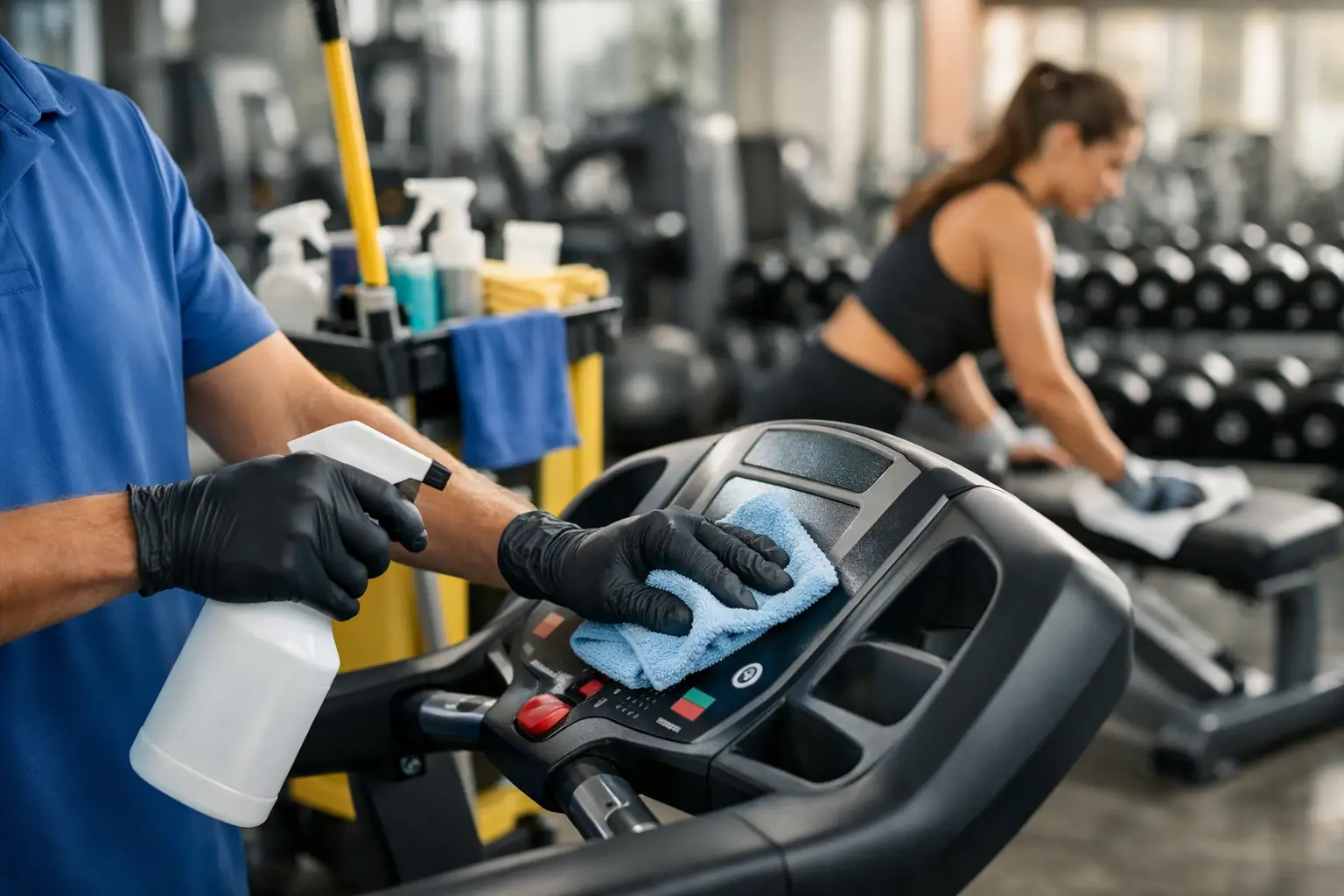
A busy gym can look clean at first glance and still fall short where it matters most. Sweat on benches, residue on cardio equipment, damp amenities, crowded change rooms and constant foot traffic create a cleaning environment that is far more demanding than a standard commercial site. That is why gym cleaning services need to be planned around hygiene risk, member experience and daily operational pressure, not treated as a simple after-hours tidy-up.
For gym operators, facility managers and strata or property teams managing fitness spaces, the stakes are practical. Cleanliness affects member retention, staff confidence, asset life and the reputation of the site. It also affects health and safety outcomes, especially in high-touch areas where bacteria and viruses can spread quickly if cleaning is inconsistent or poorly managed.
Why gym cleaning services need a specialised approach
Gyms are high-contact environments by design. Members move between shared machines, free weights, mats, lockers, showers, reception counters and water stations in quick succession. Unlike a traditional office, surfaces are exposed to body fluids, moisture, skin contact and heavy daily use from early morning to late at night.
That changes the cleaning brief. A gym requires more than visible presentation. It needs a disciplined hygiene program that targets touchpoints, controls odours, manages moisture and supports infection control. The right approach also has to work around trading hours, class schedules and member expectations. A cleaning crew that interrupts peak periods or misses amenities turnaround can create as many problems as it solves.
There is also a compliance layer. Operators are responsible for maintaining a safe environment for members, staff and contractors. While every site has different risk levels, the expectation is consistent – cleaning must be documented, repeatable and aligned with the way the facility is actually used.
The areas that matter most in a fitness facility
Equipment floors usually carry the highest cleaning load. Treadmills, bikes, rowers, cable machines and strength equipment all collect sweat and skin contact throughout the day. Handles, touchscreens, adjustment pins and seat surfaces need frequent disinfection, while dust and grime around frames, vents and under equipment can build up quickly if routine detail work is missed.
Free weight zones create a different challenge. Dumbbells, barbells, kettlebells and benches are touched constantly and often returned with residue still on them. Rubber flooring also traps dust, chalk, moisture and debris. If these areas are not cleaned correctly, they can start to look tired well before the end of the week, even when the site is relatively new.
Amenities are another make-or-break area. Change rooms, toilets and showers shape how members judge the entire facility. Grout, drains, partitions, mirrors, basins and tapware need regular attention, but so do odour control, restocking and moisture management. A gym can have spotless equipment and still lose credibility if the showers smell damp or rubbish bins are overflowing.
Reception areas and entry points matter for first impressions, but they also carry hygiene risk. Countertops, EFTPOS machines, door handles, seating and access control points all require routine disinfection. In larger facilities, group fitness studios, crèche areas and recovery zones add further complexity and need their own cleaning frequencies.
What a professional gym cleaning plan should include
A proper gym cleaning program starts with the site, not a generic checklist. Floor area, opening hours, member numbers, class intensity, staffing levels and wet-area usage all influence the cleaning schedule. A 24-hour gym in a metro location will not need the same plan as a smaller suburban fitness studio or a strata-managed apartment gym.
In most cases, the right plan combines daily cleaning, high-touchpoint disinfection, periodic deep cleaning and support services for presentation and asset care. Daily works usually cover amenities, floors, bins, touchpoints and visible equipment cleaning. High-use areas may need daytime servicing as well, especially during peak trading windows.
Deep cleaning fills the gaps that standard routines cannot. This may include machine detailing, hard floor scrubbing, carpet cleaning, wall spot cleaning, ventilation area attention and shower or tile descaling. Without this layer, the facility may stay presentable on the surface while hidden build-up shortens asset life and undermines hygiene standards.
Consumable management also matters. Soap, paper products, sanitiser stations and rubbish removal should sit within the broader service plan rather than being treated as separate issues. When these basics are missed, members notice immediately.
The operational value of reliable gym cleaning services
Clean gyms perform better operationally. Members are more likely to renew when the facility feels well maintained. Staff spend less time reacting to complaints. Equipment lasts longer when dust, moisture and residue are controlled. Managers also gain confidence that the site is being maintained to a defined standard rather than checked only when something goes wrong.
There is a commercial benefit in consistency. Poor presentation can damage a premium brand quickly, but even value-focused gyms need a standard that supports trust. Members may accept a compact layout or a basic fit-out, but they are far less forgiving of dirty bathrooms, sticky equipment or unpleasant odours.
Reliable gym cleaning services also reduce management friction. For operators with multiple locations, or for property and procurement teams overseeing different facilities, the issue is not simply whether cleaning happens. It is whether service levels are consistent, reporting is clear and issues are addressed without constant follow-up. That is where an experienced commercial provider adds value.
Choosing a provider for gym cleaning services
The right provider should understand that gyms are operational environments, not just public spaces. That means knowing how to clean around specialised equipment, how to manage wet areas safely, how to work during quiet and peak periods, and how to apply infection control practices where needed.
Experience across broader commercial and institutional settings is also useful. Providers that work in healthcare, childcare, education and other hygiene-sensitive sectors often bring stronger process discipline to gym cleaning. That tends to show up in scheduling, supervision, site reporting and quality control.
It is also worth looking at service breadth. A gym rarely needs cleaning alone. Periodic carpet cleaning, window cleaning, pressure cleaning, consumable management, waste handling and minor maintenance can all sit alongside the cleaning program. Consolidating these services through one operational partner can reduce admin load and improve accountability.
For larger operators and multi-site portfolios, coverage matters. A provider with capability across Sydney, Melbourne, Brisbane and Perth can support standardised service delivery across locations while still tailoring plans to the conditions of each site. Perfect One Services is one example of this broader model, combining commercial cleaning with integrated facility support for organisations that need reliability at scale.
Where cleaning frequency can go wrong
One of the most common mistakes in gym cleaning is under-scoping. A site may look manageable during a tender walk-through, then become far more demanding once member traffic, class turnover and amenity use are factored in. If the cleaning hours are too lean, standards usually drop first in the less visible areas – corners, drains, under equipment, grout lines and bin management.
Over-servicing can also be inefficient. Not every gym needs a constant on-site cleaning presence, and some operators can achieve strong outcomes with a well-timed combination of pre-opening, daytime touchpoint work and after-hours cleaning. It depends on member density, facility size and the standard being promised to the market.
That is why site inspection and customised planning matter. The best outcomes come from matching the cleaning program to actual usage patterns rather than copying another site’s schedule.
Cleanliness is part of the member experience
Members may join for equipment, classes or location, but they stay when the environment feels well run. Clean mirrors, dry bathroom floors, sanitised equipment and fresh-smelling amenities send a simple message – this facility is managed properly. That matters whether the site is part of a premium health club, a 24-hour franchise, a corporate wellness centre or a shared residential gym.
For operators and facility managers, cleaning should support more than appearance. It should protect health, reduce complaints, preserve assets and make day-to-day operations easier. When gym cleaning services are planned with that standard in mind, the result is not just a cleaner site. It is a facility that works better for everyone who uses it.
If your gym is busy, growing or under pressure to lift standards, cleaning is one of the clearest operational levers you can improve without disrupting the business itself.