
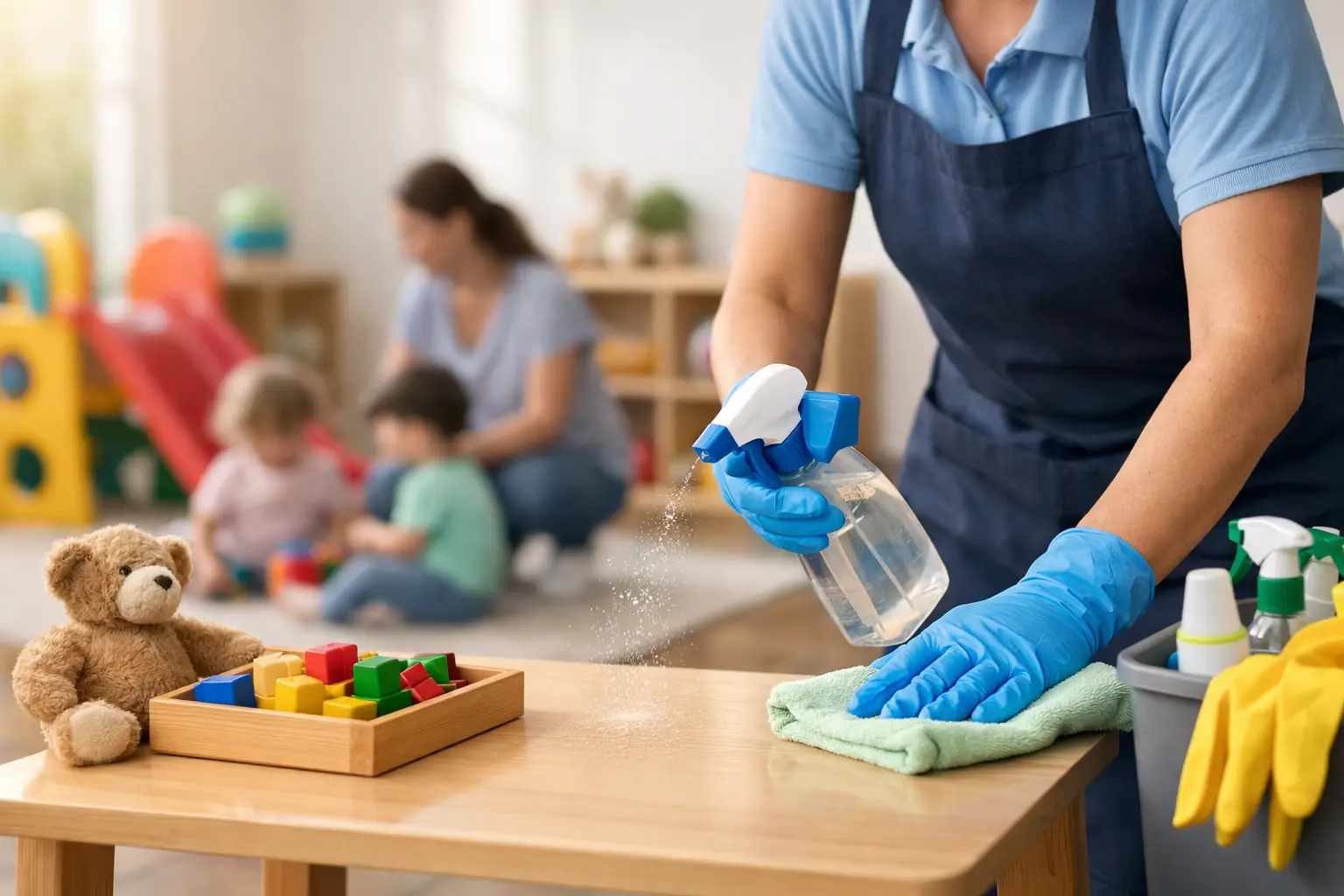
At a childcare site, cleaning standards are judged in the first few minutes. Parents notice the smell when they walk in. Educators notice whether high-touch areas were properly sanitised before the day starts. Centre operators notice when cleaning gaps turn into complaints, sick days, or compliance pressure. That is why childcare centre cleaning services need to do more than make a site look tidy. They need to support hygiene, safety, presentation and daily operations without disrupting children or staff.
Why childcare cleaning is a specialist service
A childcare environment is different from a standard office, retail tenancy or common area cleaning program. Surfaces are touched constantly, spills happen throughout the day, and rooms are used for eating, sleeping, play and learning. Bathrooms and nappy change areas need a higher level of attention, while shared toys and touchpoints can quickly become hygiene risks if cleaning is inconsistent.
For operators and facility managers, the issue is not simply frequency. It is whether the cleaning scope matches how the site actually functions. A centre with long day care, outdoor play spaces and high enrolment numbers will need a different plan from a smaller site with shorter operating hours. A one-size-fits-all approach usually leaves gaps in the areas that matter most.
Professional childcare centre cleaning services should be built around risk, traffic, use patterns and timing. That means identifying critical touchpoints, managing washroom hygiene, maintaining floors safely, and cleaning in a way that supports infection control expectations without creating unnecessary operational disruption.
What a strong cleaning program should cover
The core of any childcare cleaning plan is consistency. Daily cleaning should address classrooms, sleep areas, kitchens or food preparation zones, staff amenities, bathrooms, entry points and common touch surfaces. This sounds straightforward, but quality often depends on method, sequencing and supervision rather than just task lists.
High-touch points such as door handles, light switches, tables, chairs, cots, lockers and taps need routine sanitising with appropriate products and dwell times. Floors need to be cleaned with methods suited to the surface type and the level of daily soiling. In centres with mixed flooring, this can mean combining vacuuming, mopping and periodic machine cleaning to maintain hygiene and presentation.
Bathrooms and nappy change areas require tighter controls. These spaces need clear cleaning protocols, colour-coded equipment where required, and a strong focus on cross-contamination prevention. If these zones are handled casually, the risk is not just poor presentation. It can affect health outcomes, staff confidence and parent perception.
Outdoor areas matter as well. Sand, leaves, mud and general debris move inside quickly, especially during wet weather or high-traffic drop-off periods. External entry cleaning, pressure cleaning where needed, and attention to bins and waste areas all contribute to a cleaner, more manageable internal environment.
Infection control is where the real value sits
In childcare settings, infection control is not an occasional concern. It is part of day-to-day site management. When cleaning providers treat infection control as an add-on rather than a core discipline, standards can slip fast.
A capable provider will understand the difference between general cleaning, sanitising and disinfection, and when each is appropriate. It depends on the area, the contamination risk and the operational requirements of the site. Overusing strong chemicals in the wrong places is not good practice, but under-treating high-risk areas is equally problematic.
This is where trained commercial cleaners make a practical difference. They follow process, use products correctly, and work to schedules that reduce risk rather than just ticking off visible tasks. During periods of elevated illness, many centres also need responsive support such as targeted touchpoint cleaning, outbreak response cleaning or schedule adjustments to increase hygiene controls without overcomplicating operations.
Scheduling matters as much as the cleaning itself
One of the biggest mistakes in childcare cleaning is assuming after-hours service is the only answer. Often, it is the best base schedule, but some centres also benefit from day porter support, split shifts or targeted daytime cleaning in specific areas.
It depends on attendance, building layout and staffing patterns. A busy metro centre in Sydney or Melbourne may need early morning presentation cleaning plus after-hours deep cleaning. A larger multi-room facility in Brisbane or Perth might need additional daytime bathroom checks and rubbish removal to stay on top of hygiene standards.
The best service plans are tailored, not generic. They align with operating hours, room turnover, educator workflows and access restrictions. They also account for school holiday periods, seasonal illness spikes and special events that change foot traffic across the site.
Compliance, safety and accountability
For operators, directors and procurement teams, cleaning is also a governance issue. You need confidence that the provider is reliable, properly supervised and able to work within the site’s safety and compliance expectations.
That includes documented scopes, clear service frequencies, trained staff, safe chemical handling, incident reporting processes and quality assurance checks. It also includes practical details such as secure access management, alarm procedures and communication with centre management when issues are identified.
A provider that works across regulated environments such as childcare, education, healthcare and commercial facilities usually brings stronger operational discipline. That matters because consistency rarely comes from good intentions alone. It comes from systems, supervision and the ability to maintain standards across every shift.
Choosing childcare centre cleaning services for multi-site operations
If you manage more than one childcare location, the decision becomes broader than cleaning quality at a single site. You also need standardisation, reporting visibility and a provider with enough coverage to support growth or changing contract needs.
This is where national or multi-city capability becomes valuable. Working with one provider across Sydney, Melbourne, Brisbane and Perth can simplify procurement, reduce vendor fragmentation and make performance management easier. It can also create more consistency in service delivery, especially when your sites need aligned hygiene standards but local flexibility.
That said, scale only helps if the provider can still tailor each plan. Multi-site operators do not need a rigid national template. They need a framework that keeps standards consistent while allowing for differences in site size, room numbers, operating hours, outdoor areas and traffic levels.
Beyond routine cleaning
Routine cleaning is only one part of maintaining a childcare facility properly. Over time, carpets hold odours and soil, hard floors lose presentation, windows affect the feel of the site, and general wear can undermine an otherwise well-run centre.
That is why many operators prefer a provider that can deliver broader facility support. Periodic carpet cleaning, window cleaning, high-pressure cleaning, waste management and general maintenance help keep the centre not just clean, but operationally sharp. It also reduces the admin burden of coordinating separate trades and service vendors.
For facility managers and property managers, that integrated approach is often the more efficient option. When cleaning, hygiene and maintenance are managed under one roof, response times improve, accountability is clearer and the site is easier to keep at standard throughout the year.
What to ask before appointing a provider
Before engaging childcare centre cleaning services, ask how the scope is built, how infection control is managed and how quality is checked. Ask who supervises the cleaners, what happens when staff are absent, and how issues are escalated. A polished proposal means little if the service model behind it is weak.
You should also look closely at responsiveness. Childcare sites do not always run to plan. Spills, illness events, urgent cleans and maintenance issues can happen without notice. A provider with 24/7 capability and established service systems is better placed to respond quickly without compromising standards elsewhere.
For many organisations, this is the real test of value. The right provider does not just clean when scheduled. They help the site run better, present better and recover faster when operational issues arise. That is the standard experienced operators expect.
Perfect One Services Australia works with commercial and institutional sites that need exactly that level of reliability – practical cleaning support backed by broader facility capability and disciplined service delivery.
A childcare centre should feel clean, safe and ready before the first family arrives. When the cleaning program is properly planned, that standard becomes part of daily operations rather than a daily concern.