
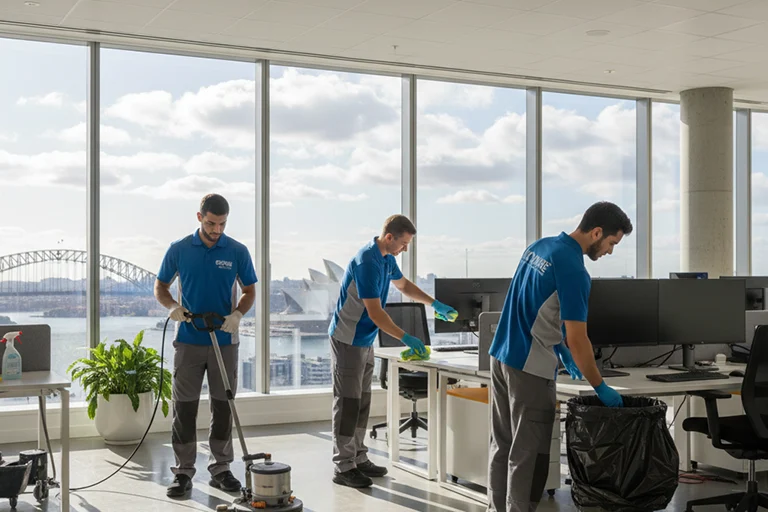
A low monthly cleaning quote can look attractive until the bins overflow by Wednesday, fingerprints build up in meeting rooms, and your staff start raising hygiene concerns. When businesses ask how much does commercial office cleaning cost, the real question is usually broader: what level of service do you need, how often do you need it, and what will it take to keep your workplace consistently clean, presentable, and compliant?
For Australian offices, commercial cleaning costs are shaped by far more than square metres alone. The size of the site matters, but so do foot traffic, bathroom use, kitchen facilities, building access, security requirements, and whether the scope includes specialist tasks such as carpet cleaning or window cleaning. A small office with heavy daily use can demand more labour than a larger site with fewer staff and controlled access.
How much does commercial office cleaning cost in Australia?
In broad terms, routine commercial office cleaning in Australia often falls somewhere between $35 and $65 per labour hour, or is priced as a fixed monthly contract based on the full scope of work. Smaller offices may spend a few hundred dollars per week, while larger multi-level corporate sites can run into several thousand dollars per month.
That said, there is no reliable one-size-fits-all rate. A 200 square metre office cleaned three nights a week will not be priced the same way as a 2,000 square metre office with daily cleaning, multiple amenities, reception areas, boardrooms, and high-touch hygiene requirements. Most serious providers assess your cleaning needs on-site before finalising a quote because labour allocation, frequency, consumables, and risk profile all affect the final figure.
If you are comparing quotes, be careful with headline rates. One contractor may quote lower but exclude consumables, sanitary disposal, periodic deep cleans, or detailed restroom servicing. Another may include those items in a higher monthly rate, which can represent better value and fewer operational issues over time.
What drives office cleaning costs?
The main cost driver is labour. Commercial cleaning is a service business, and the number of cleaning hours needed to maintain your site will usually determine most of the price. If the office requires daily attendance, after-hours access, or more detailed hygiene work, labour costs rise accordingly.
Site size is the next major factor, but size should be viewed alongside layout. Open-plan offices are generally faster to clean than workplaces with many enclosed rooms, glass partitions, breakout spaces, and frequent touchpoints. A site with several toilets, kitchens, and collaboration areas also takes longer than one with a simpler footprint.
Cleaning frequency has a direct impact on cost and service quality. A business with 10 staff in a low-traffic office may only need cleaning two or three times a week. A busy workplace with regular visitors, shared desks, and frequent kitchen use may need daily cleaning to maintain presentation and hygiene standards. Less frequent cleaning reduces cost in the short term, but it can also lead to faster wear, unpleasant amenities, and more expensive corrective work later.
The scope of service matters just as much as frequency. Standard office cleaning often includes vacuuming, mopping, dusting, emptying bins, bathroom cleaning, and wiping down kitchen surfaces. Costs increase when you add consumable restocking, internal glass cleaning, carpet steam cleaning, strip and seal work, high dusting, deep sanitisation, or detailed disinfection protocols.
Timing can also influence pricing. After-hours cleaning is common in office environments, but access limitations, security procedures, lift restrictions, and loading dock windows can all affect productivity. If cleaners lose time navigating site rules or waiting for building access, that cost tends to be reflected in the quote.
Typical pricing models you will see
Most office cleaning contracts are priced in one of three ways: hourly, per square metre, or fixed monthly contract. Hourly pricing can work for ad hoc cleaning, one-off jobs, or smaller sites with changing needs. The challenge is that hourly rates do not always show how many hours are actually required to maintain the expected standard.
Per square metre pricing is sometimes used as a starting guide, but it can oversimplify complex sites. Two offices of the same size can have very different cleaning requirements depending on staff numbers, amenities, flooring, and use patterns.
For many businesses, a fixed monthly contract is the most practical model. It provides budget certainty and aligns the cleaning plan to the agreed scope, schedule, and service standards. This approach is particularly useful for facility managers and procurement teams who need predictable spend, clear accountability, and consistent outcomes across one or multiple sites.
Cost by office size and frequency
A small office under 250 square metres with basic amenities and cleaning two or three times a week might sit at the lower end of the cost range. A medium office between 250 and 1,000 square metres with daily attendance, kitchen areas, bathrooms, and meeting rooms will generally attract a more substantial monthly fee. Large offices over 1,000 square metres, especially those in premium buildings or with multiple floors, often require structured cleaning rosters, supervision, and periodic specialist services.
Frequency changes the economics. Cleaning five days a week costs more than two or three visits, but it can lower the need for intensive corrective cleaning and help preserve carpets, hard floors, bathrooms, and shared amenities. In practical terms, the right frequency often saves money by preventing issues rather than reacting to them.
Why the cheapest quote often costs more
A low quote usually means one of three things: reduced scope, reduced labour time, or inconsistent service delivery. In office cleaning, that can show up quickly. Bathrooms are rushed, kitchens are wiped but not properly cleaned, edges are missed, and high-touch surfaces are not maintained to the expected standard.
There is also a risk to workplace experience. Staff notice when cleaning slips. So do visitors, tenants, and clients. For businesses operating in professional services, government, healthcare-adjacent environments, or multi-tenant buildings, presentation and hygiene are not minor issues. They influence reputation, comfort, and operational confidence.
A stronger quote should show what is included, how often tasks will be completed, who supplies equipment and consumables, and how quality is managed. That is where value becomes clearer. Reliable cleaning is not just about labour hours. It is about consistency, communication, supervision, and the ability to respond when site needs change.
How to compare office cleaning quotes properly
The best quote is rarely the lowest or the highest. It is the one that matches your site requirements and gives you confidence in delivery. Start by checking whether each provider has priced the same scope. If one quote includes washroom consumables, sanitary services, periodic carpet cleaning, and touchpoint sanitisation while another excludes them, they are not directly comparable.
Look closely at service frequency and task detail. Daily bin removal, restroom servicing, kitchenette cleaning, and reception presentation can all be essential in one office and unnecessary in another. The quote should reflect your actual operational needs, not a generic office template.
It also helps to assess capability beyond routine cleaning. If your provider can support window cleaning, carpet cleaning, pressure cleaning, maintenance, waste management, and urgent call-outs, that can reduce vendor complexity and improve coordination across the site. For many organisations, especially multi-site operators, that broader facilities capability is a practical advantage.
When a custom scope makes more sense than a standard package
Standard packages can work for small offices with predictable use, but larger or more regulated environments usually need a tailored plan. Offices attached to warehouses, medical consulting spaces, childcare facilities, gyms, or high-traffic retail areas often have very different hygiene and presentation requirements within the same footprint.
A custom cleaning plan allows the scope to match your building, staffing pattern, compliance needs, and budget. That may include daytime cleaning for public-facing areas, after-hours cleaning for workspaces, periodic deep cleaning, or infection control measures for sensitive environments. This is where experienced providers stand apart. They do not just quote a rate. They assess how the site operates and build a service plan around it.
For organisations managing sites across Sydney, Melbourne, Brisbane, or Perth, consistency becomes another cost factor. National capability, clear reporting, and 24/7 responsiveness can justify a higher contract value if they reduce risk and simplify management across multiple locations.
What should be included in your budget?
When planning your budget, allow for both recurring and periodic cleaning. Recurring services cover the daily or weekly essentials that keep your office functional and presentable. Periodic services cover the less frequent but necessary work that protects asset condition, such as carpet cleaning, window cleaning, floor maintenance, and detailed high-touch sanitisation during seasonal illness periods.
It is also worth budgeting for flexibility. Office occupancy can change, project teams may come on-site, and end-of-lease or event cleaning may arise with little notice. A provider with scalable service capability can help you respond without disrupting normal operations.
If you are asking how much does commercial office cleaning cost, the most accurate answer is this: it depends on the level of cleanliness, hygiene control, and reliability your workplace requires. A well-structured cleaning contract should support your staff, protect your image, and make daily operations easier. If the quote does that clearly, you are looking at value, not just cost.