
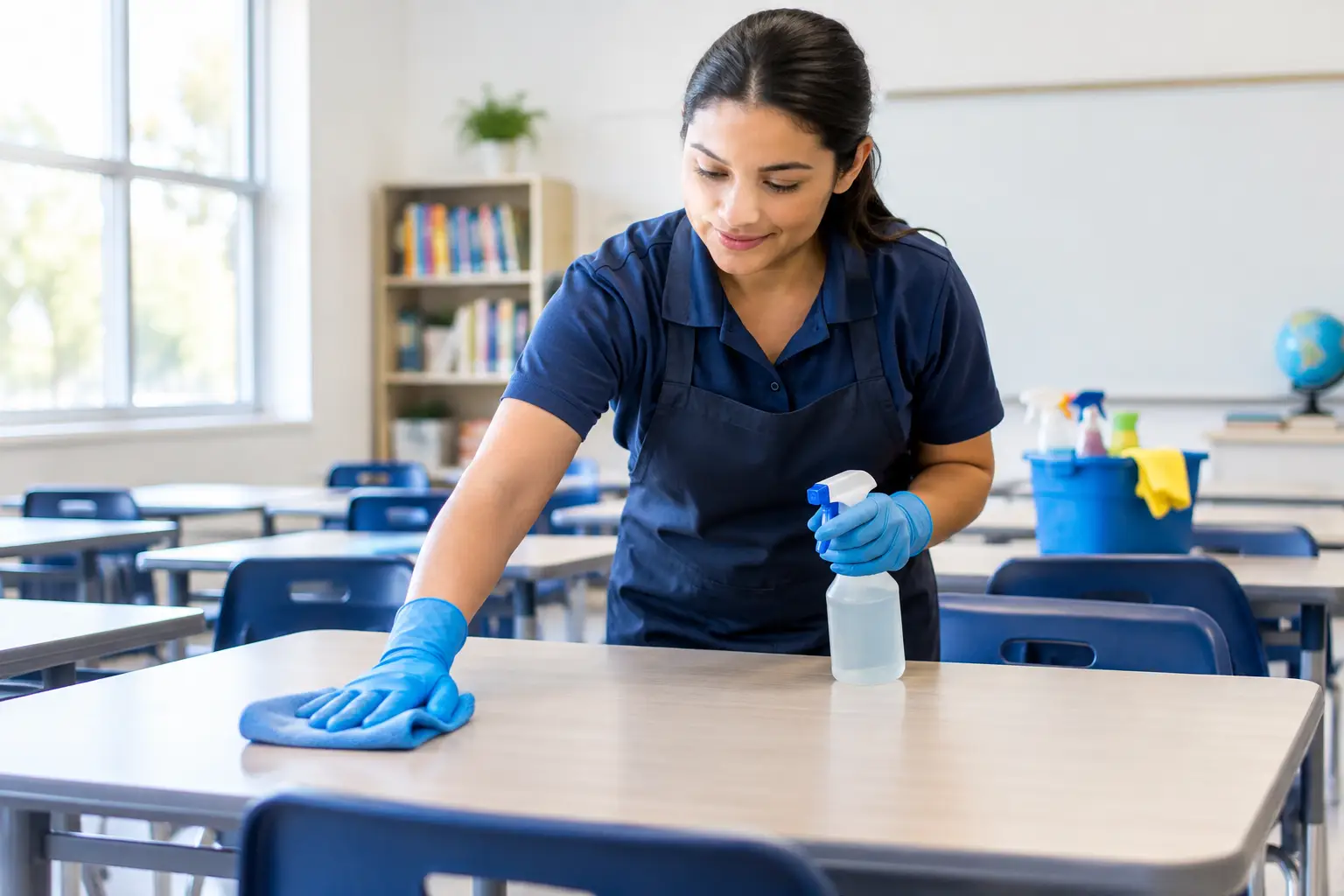
A school can look presentable at 8:30 am and still carry hygiene, safety and operational risks that become visible by lunchtime. School cleaning quality is not measured by polished floors alone. It is measured by whether classrooms, amenities, staff areas, sick bays, touchpoints and outdoor spaces are consistently clean, safe and ready for students, educators and visitors.
For school leaders, business managers and procurement teams, the challenge is maintaining that standard across busy terms, changing enrolments, sporting events, wet weather and illness outbreaks. A reliable cleaning program needs more than a contractor attending site. It requires a defined scope, trained people, quality controls and a provider that understands how schools operate.
What school cleaning quality looks like in practice
High-quality school cleaning is visible in the details, but its real value sits behind the scenes. Amenities are properly sanitised and stocked before demand peaks. Rubbish is removed before it affects presentation or attracts pests. Classroom surfaces are cleaned without disrupting teaching materials, and high-touch areas receive the attention their level of use requires.
Consistency matters because schools have a broad mix of spaces with different risks. A science room, canteen, administration office, gymnasium and early learning area cannot be cleaned with the same method or frequency. Each needs an appropriate plan based on foot traffic, activities, surface types and the people using the space.
Quality also means working safely. Cleaning teams must use suitable products, follow chemical handling procedures, display wet-floor signage where needed and store equipment securely. In education settings, cleaners are working around children and staff, often outside standard office hours. Their conduct, identification, training and site awareness are part of the service standard.
Start with a scope built around the school day
Generic cleaning schedules commonly create gaps. A scope may state that classrooms are cleaned daily, but fail to identify what daily cleaning actually includes. Are desks wiped? Are door handles disinfected? Is rubbish removed from every room? Are whiteboards, sinks, floors and shared equipment included? Without clarity, expectations and results can quickly drift apart.
A strong cleaning scope separates routine work from periodic work and response work. Routine tasks may cover daily classroom cleaning, amenities, reception areas, bins and vacuuming. Periodic tasks can include detailed wall spot cleaning, carpet cleaning, window cleaning, high-pressure cleaning and floor care. Response work covers incidents such as spills, illness-related cleaning, broken glass or urgent waste removal.
The schedule should also reflect the school timetable. Cleaning during class changes or before afternoon pick-up may suit some areas, while other work is best completed after hours. Larger sites may need daytime cleaning support for amenities, spills and high-traffic entry points, combined with a full evening service. The right model depends on the campus layout, enrolment, operating hours and available budget.
Focus on high-touch and high-risk areas
Not all surfaces carry the same level of risk. Door handles, handrails, taps, toilet flush buttons, reception counters, shared keyboards and drinking fountains need regular attention because they are used repeatedly by many people. In younger year levels and childcare-adjacent spaces, shared toys, tables and bathroom surfaces may require more frequent cleaning and disinfection.
During periods of increased illness, cleaning plans should be adjusted rather than simply expecting the standard schedule to do more. This may mean increased touchpoint cleaning, additional consumables, targeted disinfection and clear communication with site management. Infection control should be evidence-based and suited to the setting, not treated as a blanket promise.
The people behind the cleaning standard
Even the best scope will not deliver results without capable cleaners. Schools need teams that are inducted to site requirements, trained in safe work practices and able to follow detailed instructions consistently. They should understand how to work respectfully around learning environments, protect confidential materials in offices and report hazards rather than leave them for someone else to resolve.
Reliable staffing is particularly important in education. Frequent changes in cleaners can lead to missed tasks, inconsistent presentation and added administration for school staff. A provider should have documented recruitment, training, supervision and relief arrangements so the service continues when regular team members are unavailable.
For many schools, compliance requirements also form part of the decision. These can include appropriate background checks, insurance, workplace health and safety processes, incident reporting and contractor sign-in procedures. Procurement teams should verify these requirements before service begins, then review them at agreed intervals.
Measure school cleaning quality, do not assume it
A cleaning service should be managed through practical evidence, not vague assurances. Site inspections, task checklists, supervisor reviews and issue registers provide a clear picture of whether the agreed standard is being met. These checks are most useful when they lead to action rather than becoming paperwork that no one reviews.
Quality inspections should look beyond obvious presentation. A clean-looking bathroom may still have empty soap dispensers, poorly cleaned touchpoints or odours caused by drainage issues. A tidy classroom may have rubbish left behind furniture or marks on frequently used desks. Regular inspections help identify patterns before they become recurring complaints.
School representatives should also have a simple process for raising concerns. The response pathway needs to be clear: who receives the request, how urgent matters are escalated, when the site can expect attendance and how completion is confirmed. This is especially important for incidents affecting student safety, hygiene or access to facilities.
A useful review process considers both service performance and changing site needs. If a new building opens, a sporting program expands or a particular area experiences heavier use, the cleaning plan should change with it. Holding a provider to an outdated scope does not protect quality or value.
Cleaning and facility maintenance work better together
Many issues described as cleaning problems are actually facility issues. Persistent bathroom odours may be linked to plumbing. Damaged flooring may prevent proper cleaning. A blocked drain, broken soap dispenser, faulty light or overflowing bin enclosure can affect hygiene and presentation regardless of how well cleaners perform their tasks.
Coordinating cleaning with maintenance reduces delays and avoids the common problem of multiple providers passing responsibility between one another. A facilities partner that can coordinate cleaning, waste management, carpet care, window cleaning, plumbing, electrical support and general maintenance gives site managers a clearer line of accountability.
This approach is particularly valuable across multi-campus schools and education groups. Rather than managing separate providers in Sydney, Melbourne, Brisbane and Perth, operations teams can apply consistent standards while allowing for each site’s individual requirements. Perfect One Services supports this model with tailored cleaning and integrated facility services designed for complex operational environments.
Get value from the contract, not just the lowest price
Price matters, but a low hourly rate can become expensive when the scope is unclear, staffing is unstable or issues are not resolved promptly. A cleaning proposal should state labour coverage, task frequencies, consumables, supervision, quality checks and any exclusions. This gives decision-makers a realistic basis for comparing providers.
It is also worth clarifying what happens outside the normal schedule. Schools occasionally need urgent support after events, storms, outbreaks, vandalism or building works. A provider with responsive communication and 24/7 capability can help protect the site without forcing staff to search for emergency contractors at short notice.
The best contract is not necessarily the most extensive one. Smaller campuses may need a focused daily service and scheduled periodic work, while large schools may require dedicated daytime attendants, multiple cleaning shifts and broader maintenance support. The key is matching resources to real site demand, then reviewing performance as that demand changes.
A well-managed school is felt before it is noticed. Students can focus, educators can teach and visitors can arrive with confidence when amenities work, shared spaces are cared for and hygiene standards hold up through the busiest part of the day. That is the standard worth specifying, inspecting and expecting.