
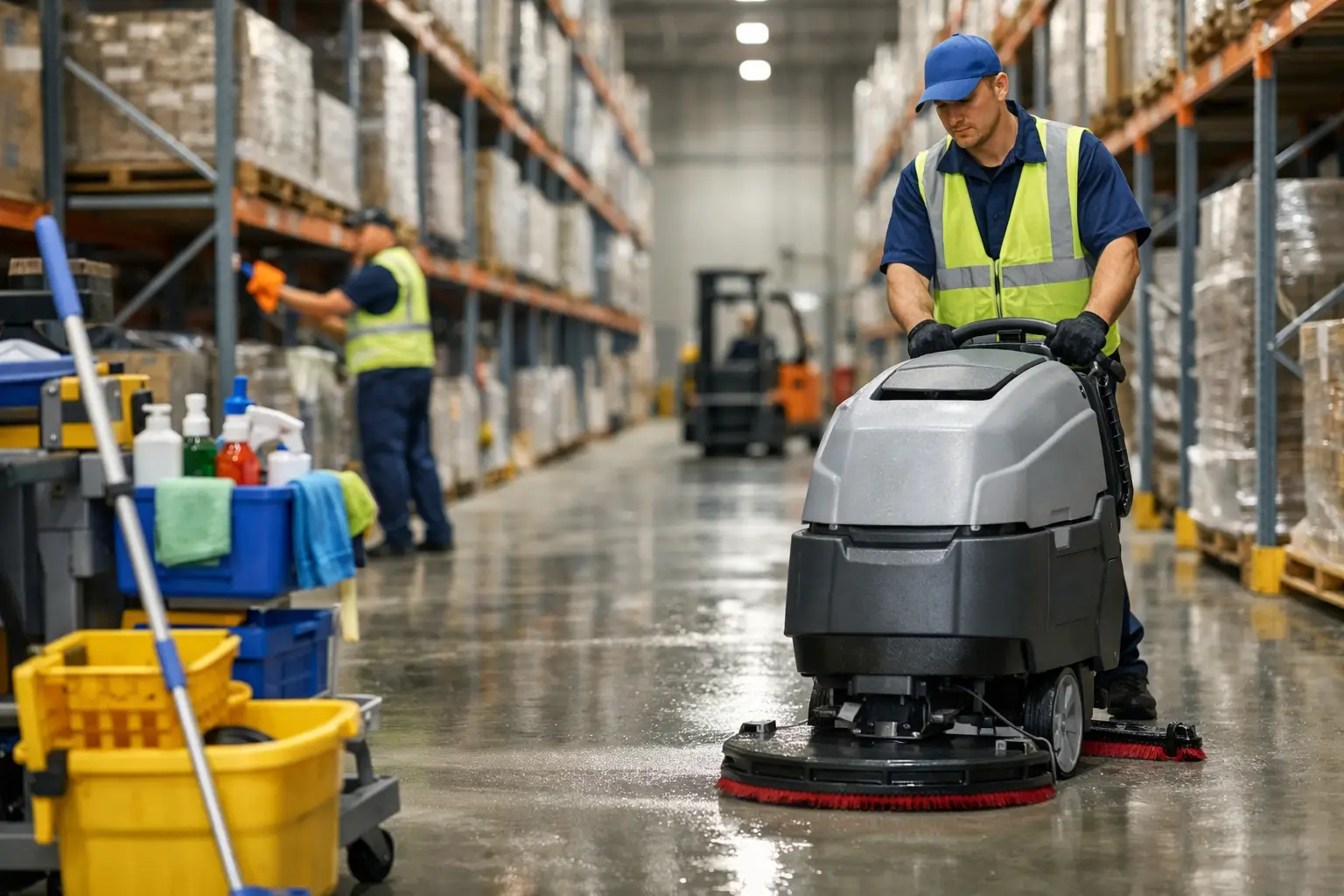
A warehouse can look busy and productive while hidden risks build across the site. Dust settles on racking, stretch-wrap gathers near dispatch, tyre marks reduce floor visibility, and spills turn high-traffic aisles into slip hazards. Effective commercial cleaning for warehouses is not simply about presentation. It is a planned operational service that supports safety, protects stock and equipment, and helps every shift start with a cleaner, more controlled workplace.
For facility managers and operations teams, the challenge is rarely deciding whether cleaning is needed. The challenge is creating a cleaning plan that keeps pace with changing stock volumes, forklift traffic, loading schedules, weather conditions and compliance requirements without interrupting the work that keeps the warehouse moving.
Commercial Cleaning for Warehouses Is a Site-Control Measure
Warehouses create contamination differently from offices, retail spaces or other commercial environments. Fine dust can travel through roller doors and ventilation systems. Cardboard fibres, pallet debris and plastic offcuts accumulate around packing stations. Oil, grease and tyre residue can be carried through traffic lanes. In some facilities, cold storage, food handling, chemicals or sensitive inventory introduce further hygiene and safety requirements.
A generic after-hours clean may handle visible rubbish, but it will not necessarily address the areas that affect site performance. A professional warehouse cleaning programme starts with how the facility operates: where people walk, where forklifts travel, where goods are received, where waste is generated and which areas need controlled access.
The right scope can reduce slip and trip risks, maintain clearer line markings and walkways, limit airborne dust around stock, and improve the condition of floors, amenities and shared staff areas. It also gives managers a documented, consistent standard rather than relying on ad hoc clean-ups when a problem becomes obvious.
Start With a Practical Site Assessment
No two warehouses have the same cleaning priorities. A high-volume distribution centre with multiple loading bays needs a different service model from a smaller storage facility or a manufacturing warehouse. Before setting a roster, assess the site layout, operating hours, surfaces, risks and access requirements.
High-traffic floor areas usually deserve the closest attention. Forklift routes, pedestrian crossings, dispatch lanes, dock entries and battery charging zones can become dirty quickly and may require scheduled sweeping, scrubbing or spot treatment. The cleaning method needs to suit the floor finish, level of traffic and the substances present. Excess water on a floor, for example, can be as disruptive as the soil being removed if drying time and traffic control are not managed properly.
A thorough assessment should also consider harder-to-see areas: beneath racking where practical and safe, around dock levellers, inside amenities, lunchrooms, mezzanines, stairwells, office spaces and external entry points. These areas influence hygiene, staff experience and the overall standard visitors, contractors and auditors see when they enter the facility.
Match frequencies to warehouse activity
Cleaning frequency should follow operational demand, not a fixed template. Daily work may be appropriate for busy traffic lanes, amenities, lunchrooms, entry areas and waste points. Weekly or periodic work may suit detailed floor scrubbing, high dusting, internal glass and less-used storage zones.
Seasonality matters too. Wet weather can bring mud, water and debris through loading areas. Peak trading periods increase carton waste and foot traffic. A warehouse that expands from one shift to two may need its cleaning plan reviewed immediately, rather than waiting for standards to decline.
The most effective plans combine routine cleaning with responsive support. Routine work keeps the site stable; responsive service handles spills, urgent contamination, post-maintenance clean-ups and unexpected operational demands.
Floor Care Has a Direct Safety Impact
Warehouse floors carry the greatest workload on site. They are exposed to pallet jacks, forklifts, trolleys, staff footwear, loading activity and outdoor contaminants. When cleaning is inconsistent, dust and residue can build up, affecting traction, appearance and the performance of floor coatings or line markings.
Mechanical sweeping and scrubbing can be more effective than manual methods across large floor areas, but the equipment and chemicals must be selected carefully. Aggressive products may damage some coatings, while an unsuitable machine can leave water behind or struggle to reach tight aisles. A site with polished concrete, epoxy flooring, sealed surfaces or specialised anti-slip treatments needs a tailored approach.
Cleaning teams should also work within the warehouse traffic plan. Clear communication around closed sections, drying areas and active work zones is essential. The aim is to improve safety without creating a new obstruction for staff, forklifts or deliveries.
Control Dust, Debris and Waste Before They Spread
Dust is more than a presentation issue. In warehouses, it can settle on stock, interfere with sensitive equipment, affect air quality and create additional cleaning work throughout offices and staff facilities. Cardboard waste, shrink wrap and damaged pallets can also migrate quickly from packing and receiving areas into aisles and exits.
A good cleaning schedule focuses on containment as well as removal. This may include regular collection from waste stations, cleaning around compactors or bins, sweeping dispatch zones and managing debris around racking and machinery where access permits. Waste management and recycling arrangements should support the cleaning programme, particularly at sites with high packaging volumes.
External areas deserve attention as well. Loading docks, roller door approaches, car parks and footpaths can carry dirt indoors and influence first impressions. High-pressure cleaning, external sweeping and periodic wash-downs can help maintain these spaces, although frequency depends on vehicle movement, surrounding construction activity and local weather.
Do Not Overlook Amenities and Shared Spaces
A warehouse team may spend most of the shift on the floor, but amenities are where hygiene standards are judged most closely. Bathrooms, change rooms, lunchrooms, kitchens and office areas need reliable cleaning and replenishment. When these spaces are neglected, staff notice immediately.
This is also where infection control practices matter. High-touch points such as door handles, taps, benches, lockers, light switches and shared appliances need appropriate cleaning attention. The required frequency will depend on workforce size, shift patterns and the nature of the workplace, but consistency is essential.
For multi-shift sites, daytime or between-shift servicing can be valuable. A clean lunchroom at 6 am may not remain clean after a full operational shift. Scheduling services around break times and handovers keeps common areas usable without disrupting staff.
Choose a Provider That Can Work Around Operations
Warehouse cleaning requires more than a crew and a mop. Your provider should understand site inductions, PPE requirements, traffic management, chemical handling, safe equipment use and security protocols. They should be able to work after hours, before shift starts or during agreed low-activity windows, with a clear process for communicating changes and reporting issues.
The best arrangement is usually a customised scope with measurable standards. This may cover floor cleaning, amenities, office areas, rubbish removal, high dusting, window cleaning, pressure cleaning and periodic deep cleans. Combining these services with property maintenance, plumbing, electrical support or handyman work can also reduce vendor complexity for larger sites.
Perfect One Services provides tailored commercial and integrated facility services for warehouses and industrial facilities across Sydney, Melbourne, Brisbane and Perth. With 24/7 availability, cleaning can be planned around operational requirements rather than forcing operations to fit a cleaning roster.
Review the Plan as the Site Changes
A cleaning contract should not remain static when the warehouse changes. New racking, additional shifts, changed stock profiles, a larger workforce or a new tenant can all affect the site’s cleaning needs. Regular reviews allow managers to adjust frequencies, address recurring issues and plan deeper services before dirt and damage become costly.
Useful reviews focus on practical evidence: recurring spill locations, floor condition, waste volumes, staff feedback, audit findings and areas that consistently require reactive work. If a particular dock is always dirty after rain or a packing zone generates more debris than expected, the answer may be a revised schedule or process, not simply asking cleaners to work faster.
A clean warehouse supports more than appearances. It gives your people clearer, safer spaces to do their jobs, helps protect the assets your operation depends on and shows that site standards are actively managed. The right cleaning plan should make that control visible every day, from the loading dock to the lunchroom.