
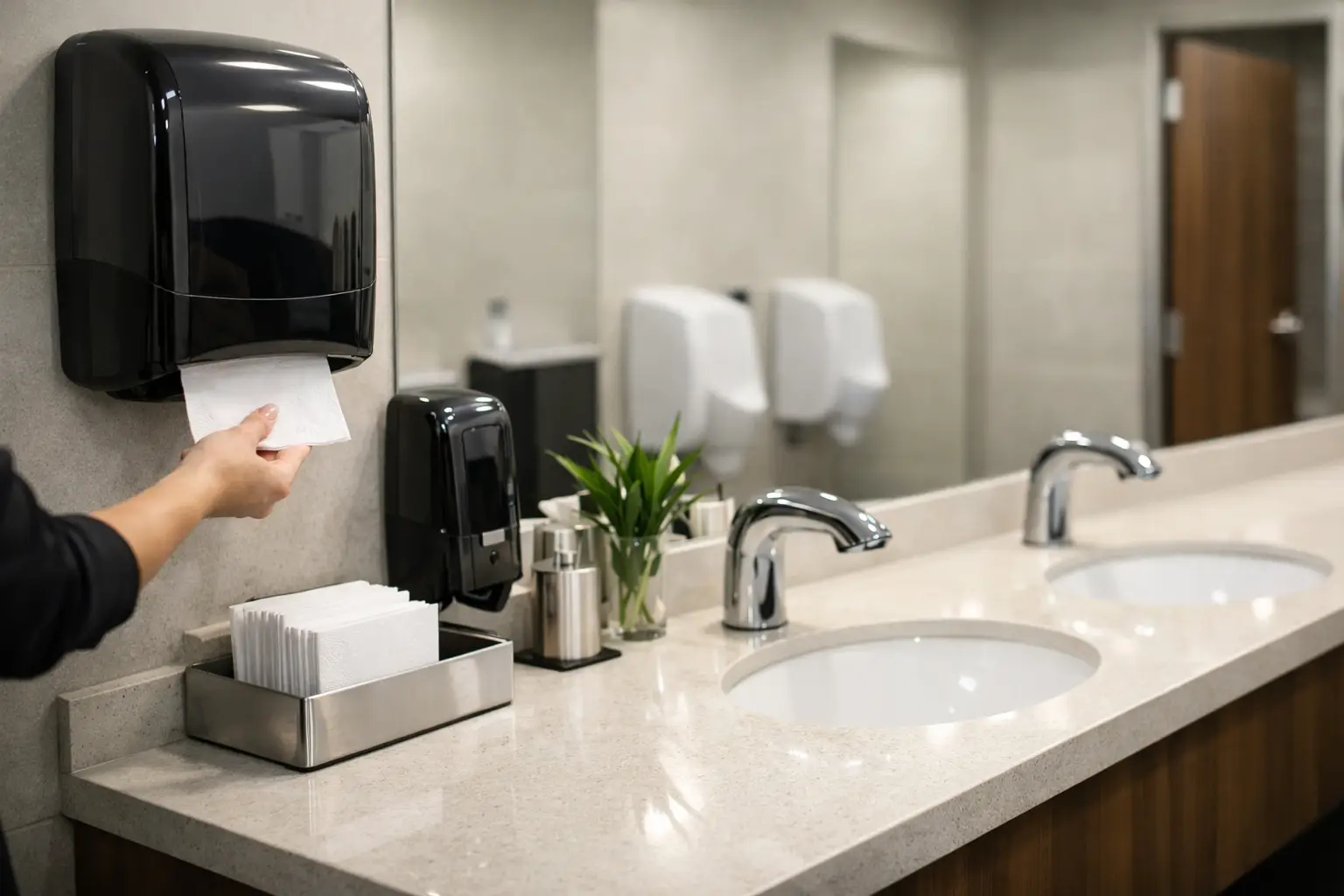
A washroom can shape how people judge an entire facility in seconds. An empty soap dispenser, unpleasant odour or overflowing sanitary bin signals poor control, even when the rest of the workplace is well managed. Professional washroom services for businesses keep these high-use areas hygienic, presentable and reliably supplied – protecting staff, visitors, customers and your organisation’s reputation.
For facility managers, property managers and operations teams, the task is not simply to have the amenities cleaned. It is to maintain a consistent standard across different traffic levels, site layouts and operating hours, while managing consumables, waste, infection-control requirements and service records. The right service plan makes that standard easier to maintain.
Why washroom standards matter to commercial operations
Washrooms are shared environments with frequent contact points: door handles, flush buttons, tapware, dispensers, dryer controls and waste receptacles. Without a disciplined cleaning program, soils and bacteria can build up quickly, particularly in busy offices, retail centres, schools, gyms, healthcare settings and industrial workplaces.
The operational impact extends beyond appearance. Poorly maintained washrooms can generate complaints, create slip hazards, increase odour issues and affect employee comfort. In customer-facing premises, they can also undermine confidence in the quality of the wider business. A clean, stocked washroom tells people that the site is managed with care.
For workplaces with vulnerable occupants or heightened hygiene requirements, such as childcare centres, medical facilities and aged-care-related sites, cleaning methods and product selection need additional consideration. High-touch surfaces may require more frequent attention, while colour-coded equipment and documented procedures help reduce the risk of cross-contamination.
What washroom services for businesses should cover
A reliable washroom program is built around the real use of the facility, not a generic checklist. A small professional office with weekday traffic needs a different service schedule from a shopping precinct, school, warehouse or 24-hour gym. Site inspections, user numbers, peak periods and existing pain points should guide the scope.
Thorough cleaning of fixtures and touchpoints
Cleaning should address toilets, urinals, basins, mirrors, partitions, dispensers, taps, door hardware, floors and accessible bathroom fittings. The focus is on both visible presentation and hygiene-critical areas that may be missed during a quick surface clean.
Effective cleaning also means using products suited to each surface. Harsh chemicals can damage finishes, while unsuitable products may leave residue, affect indoor air quality or fail to control odours. A professional provider should use appropriate commercial-grade products and safe work practices for the environment.
Consumable replenishment and stock control
Running out of toilet paper, hand soap, paper towel or sanitary disposal products creates an immediate service failure for users. Stocking should be based on consumption patterns rather than guesswork. High-traffic washrooms may need replenishment during the day, while lower-use sites may be adequately served on a scheduled visit.
A managed supply approach gives businesses clearer accountability. Instead of site staff making emergency purchases or discovering shortages after a complaint, consumables are checked and replenished as part of the agreed service routine. It also helps standardise product quality across multi-site portfolios.
Sanitary and washroom waste management
Sanitary bins and washroom waste require discreet, scheduled handling. Collection frequency should reflect usage, seasonal changes and the nature of the site. A service that is too infrequent can result in odour, overflow and a poor user experience; one that is unnecessarily frequent can add avoidable cost.
The best arrangement is practical and documented, with clear service intervals and the capacity to respond when attendance or site activity changes. For example, a venue hosting an event, a school during term time or a retail site in a holiday period may need temporary adjustments.
Odour control and presentation
Odour is one of the most common washroom complaints, and fragrance alone is not a solution. Persistent odours can point to cleaning gaps, full bins, floor and grout build-up, ventilation problems, blocked drains or plumbing faults. These issues need to be assessed rather than masked.
A facilities partner with broader maintenance capability can be particularly valuable here. If cleaning teams identify a leaking cistern, slow drain, faulty exhaust fan or damaged fixture, the issue can be escalated promptly for plumbing, electrical or property maintenance support. This reduces the delay and vendor complexity that often leaves small faults unresolved.
Setting the right service frequency
There is no single cleaning frequency that suits every business. The appropriate schedule depends on user volume, opening hours, the type of occupants, weather conditions, available facilities and the standard expected by customers or tenants.
An office washroom may be serviced daily, with additional attention after large meetings or events. A busy gym may require several checks each day because moisture, showers and high foot traffic increase cleaning demands. Retail and hospitality-adjacent sites often need responsive daytime attendance to maintain presentation during trading hours. Industrial facilities may need targeted cleaning to manage dust, mud or workshop-related residue tracked into amenities.
Rather than relying only on a fixed schedule, consider a combination of planned cleaning and periodic quality inspections. This gives site managers confidence that the agreed standard is being maintained, while allowing the plan to change as occupancy or operations change.
Compliance, safety and infection control
Washroom cleaning is part of broader workplace health and safety management. Wet floors must be controlled with appropriate signage and cleaning techniques. Chemicals need to be stored, labelled and used in line with safety requirements. Staff must understand how to handle waste safely and when personal protective equipment is required.
Documentation matters, particularly for larger organisations, government facilities, healthcare environments and multi-tenanted properties. Cleaning schedules, completed tasks, incident reporting and maintenance observations create a clearer record of service delivery. They also help managers identify recurring problems, such as repeated vandalism, water leaks or unusually high consumable use.
Infection-control measures should be proportionate to the setting. A healthcare site requires a more specialised approach than a standard office, but all commercial premises benefit from consistent high-touch cleaning, correct hand hygiene supplies and trained cleaners who follow established procedures.
Choosing a washroom service provider
Price matters, but it should not be the only measure. A low-cost service that misses replenishment, provides inconsistent staff or cannot respond to urgent issues can create greater cost through complaints, downtime and reactive maintenance.
When assessing providers, look for clear scope, trained personnel, quality controls and the ability to tailor services to the site. National or multi-city organisations should also confirm that standards can be delivered consistently across locations, not simply promised in a proposal.
Ask how service quality is checked, how shortages or defects are reported, and who manages urgent requests outside normal hours. It is also worth confirming whether the provider can support associated services such as general commercial cleaning, waste management, high-pressure cleaning, plumbing and maintenance. Consolidating these needs with one accountable partner can simplify site management and improve response times.
Perfect One Services Australia provides washroom cleaning within broader commercial cleaning and integrated facility service plans across Sydney, Melbourne, Brisbane and Perth. This approach supports businesses that need dependable hygiene, maintenance coordination and 24/7 operational support under one service relationship.
A washroom plan that protects your workplace
The most effective washroom service is rarely the one with the longest checklist. It is the one that matches your facility’s actual conditions, keeps essential supplies available, identifies faults early and gives users a consistently clean space every time they enter.
Review your current washroom standard from the user’s perspective. If staff are raising repeat issues, consumables are regularly running short or small maintenance faults are lingering, the service plan may need more than another quick clean. A tailored inspection and maintenance routine can turn an overlooked area into a reliable part of your facility’s daily performance.