
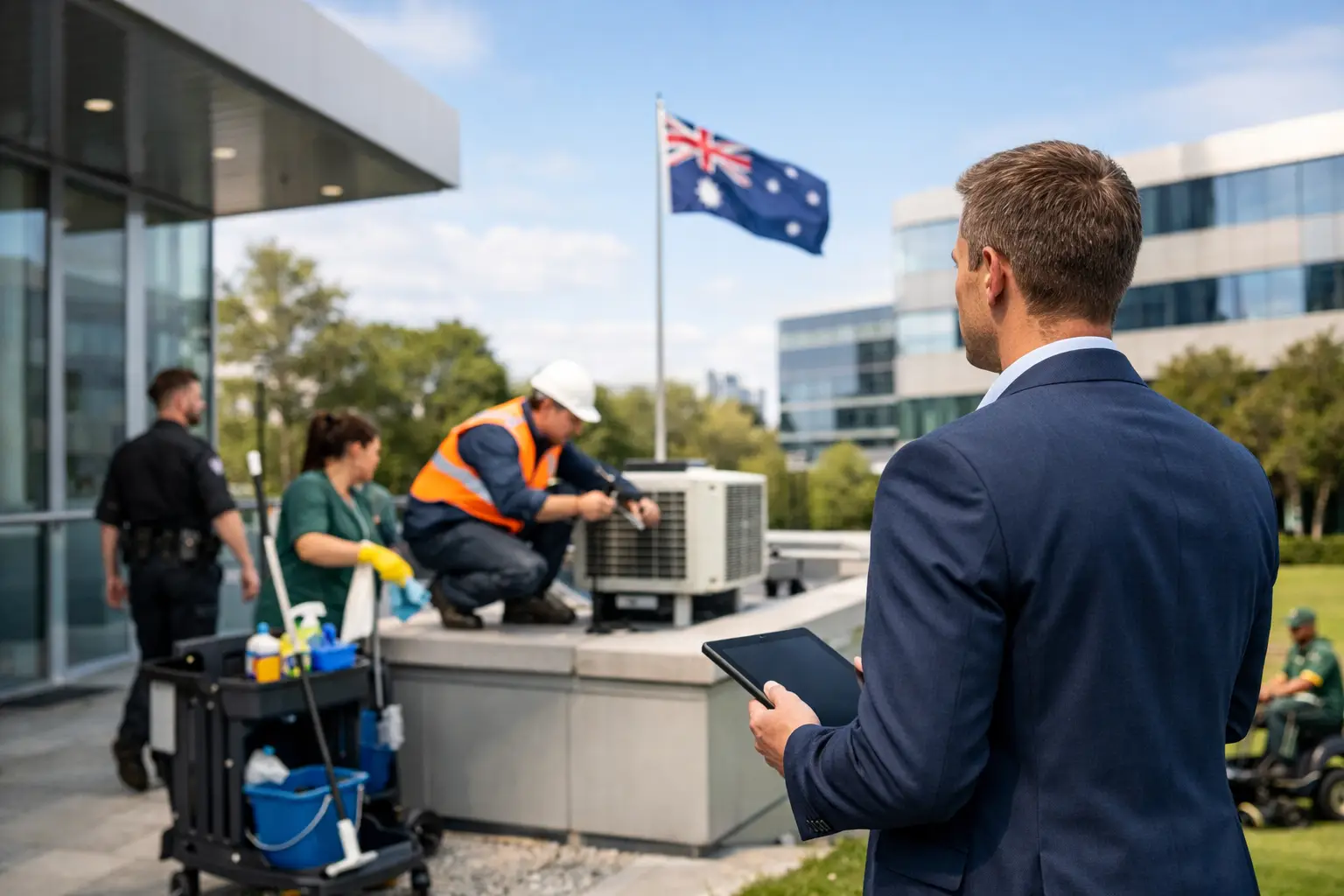
When a site runs well, people notice the results rather than the effort behind them. The floors are clean, the amenities are stocked, the lighting works, waste is removed on time, and urgent repairs do not sit in a queue for days. That is the value of facility management services Australian businesses rely on – not just to keep buildings presentable, but to keep operations moving without friction.
For property managers, operations teams and procurement leads, the challenge is rarely one issue in isolation. It is the overlap between cleaning standards, maintenance schedules, compliance obligations, contractor coordination and tenant expectations. Managing those functions through multiple suppliers can create delays, blurred accountability and inconsistent service quality. A more integrated model solves that problem.
What facility management services in Australia actually cover
Facility management is often misunderstood as basic upkeep. In practice, it is the coordination of essential services that protect safety, hygiene, presentation and asset performance across a site or portfolio.
That can include daily commercial cleaning, deep cleaning, washroom hygiene, waste management, recycling, consumables, grounds upkeep and reactive maintenance. In many environments it also extends to specialist support such as carpet cleaning, window cleaning, high-pressure cleaning, sweeping and scrubbing, plumbing, electrical works, handyman services and broader property maintenance.
The exact mix depends on the site. A medical practice has different priorities from a logistics facility. A childcare centre requires stronger hygiene controls than a standard office. A retail precinct may need early morning presentation services, quick response maintenance and careful coordination around trading hours. The point is not to force every building into the same plan. The point is to build the right service model around how each site actually operates.
Why businesses are consolidating facility management services Australia-wide
Across Australia, many organisations are moving away from fragmented supplier arrangements. The reason is straightforward. Consolidation reduces operational drag.
With one provider managing multiple services, there is a clearer chain of responsibility. Instead of chasing separate contractors for cleaning, electrical faults, plumbing issues and ad hoc maintenance, your team works through one accountable partner. Service requests can be triaged faster, reporting is easier to track and site standards are more consistent from one visit to the next.
There is also a cost control benefit, although it is not always about finding the lowest line-item price. In some cases, a standalone contractor may appear cheaper on paper. The trade-off comes when poor coordination causes repeat callouts, missed works, tenant complaints or avoidable downtime. A well-managed facilities program tends to create better value over time because it reduces inefficiency and gives decision-makers better visibility.
Cleaning is still central – but it is only one part of performance
For many commercial and institutional sites, cleaning remains the most visible part of facility management. It affects first impressions, staff wellbeing, infection control and the day-to-day experience of everyone using the space.
But cleaning on its own does not solve operational issues if damaged fixtures remain unrepaired, waste areas are unmanaged or site presentation declines between scheduled visits. That is why integrated services matter. A provider that can handle hygiene, maintenance and presentation together is better placed to keep the whole environment functioning at the right standard.
This is particularly important in sectors where compliance and public confidence matter. Healthcare settings, schools, childcare centres and gyms all require more than a cosmetic clean. They need disciplined processes, trained staff, correct product use and service plans that reflect actual risk points. In these environments, facility management is not a convenience purchase. It is part of responsible site operation.
What to look for in a facility services partner
Choosing a provider should start with capability, but it should not end there. Many suppliers can offer a service list. Fewer can deliver those services consistently across multiple sites, after hours and under clear performance controls.
A strong partner should be able to assess your building type, operating hours, traffic levels and compliance requirements, then shape a plan around them. That includes routine scheduling, escalation pathways, reporting and quality assurance. If the proposal is generic, the service is likely to be generic too.
Coverage also matters. Businesses operating in Sydney, Melbourne, Brisbane and Perth often need a provider with national capability and local responsiveness. It is not enough to have a logo in multiple cities. The real test is whether service quality, communication and accountability hold up across every location.
You should also look closely at responsiveness. Reactive work is part of facilities management, whether that means an urgent spill, a plumbing issue, an electrical fault or a last-minute presentation requirement before an inspection. A provider with 24/7 support capacity is better equipped to protect continuity when conditions change outside standard business hours.
The trade-off between specialist providers and integrated delivery
There are cases where a single specialist contractor makes sense. If your need is narrow, infrequent and highly technical, a one-off specialist engagement may be appropriate. Not every service has to sit inside one contract.
However, for sites with recurring cleaning, maintenance and hygiene demands, a fully integrated arrangement usually creates stronger control. It simplifies communication, reduces contractor overlap and helps ensure standards are managed as one system rather than a set of disconnected tasks.
The key is balance. Integration should not mean sacrificing expertise. The best facility services providers combine broad operational coverage with specialist capability where it counts – especially in infection control, high-risk cleaning, trade services and compliance-sensitive environments.
Sector needs are different, and your service plan should reflect that
An office building may prioritise daily cleaning, washroom servicing, consumables and quick-response maintenance. A strata property may need common area presentation, rubbish management, pressure cleaning and handyman support. An industrial site may place more weight on sweeping, scrubbing, safety-focused cleaning and maintenance coordination around operations.
In healthcare and childcare environments, the standard rises again. Touchpoint disinfection, cross-contamination controls, safe chemical handling and documented hygiene protocols are not optional extras. The same applies to schools and gyms, where high foot traffic and shared surfaces increase hygiene pressure.
This is where tailored planning matters. Good facility management does not rely on a standard checklist alone. It accounts for occupancy patterns, cleaning frequencies, risk exposure, public-facing areas and the practical realities of the site.
Measuring value beyond the contract price
A facilities contract should support business outcomes, not just tick a procurement box. That means looking beyond hourly rates and comparing providers on reliability, reporting, issue resolution and consistency.
Ask whether the provider can reduce administrative load on your internal team. Ask how they manage quality checks. Ask what happens when a scheduled service is missed or a reactive issue escalates. Ask how they maintain standards across multiple locations and whether they can scale with your portfolio.
The answers matter because a low-cost arrangement can become expensive if it creates tenant dissatisfaction, hygiene failures, maintenance backlogs or reputational risk. By contrast, a well-run integrated model protects asset value, supports staff and visitors, and gives decision-makers confidence that the site is under control.
A practical direction for Australian businesses
The demand for stronger facility management services Australia-wide is not driven by trend. It is driven by operational reality. Businesses want fewer suppliers to manage, clearer accountability, better hygiene outcomes and faster response when something needs attention.
That is why integrated providers continue to gain ground. They bring cleaning, maintenance and support services together in a way that suits modern commercial environments, especially for organisations managing multiple sites or high-compliance facilities. Perfect One Services Australia is one example of that model, combining professional cleaning with broader facility support for businesses that need dependable service under one roof.
If your current setup relies on several contractors, inconsistent follow-up and too much internal coordination, it may be time to reassess the structure rather than just the price. The right facility services partner should make your site easier to run, not harder to manage. When that happens, standards improve quietly, issues are handled early and your team can focus on the work that sits outside the cleaning cupboard and maintenance log.